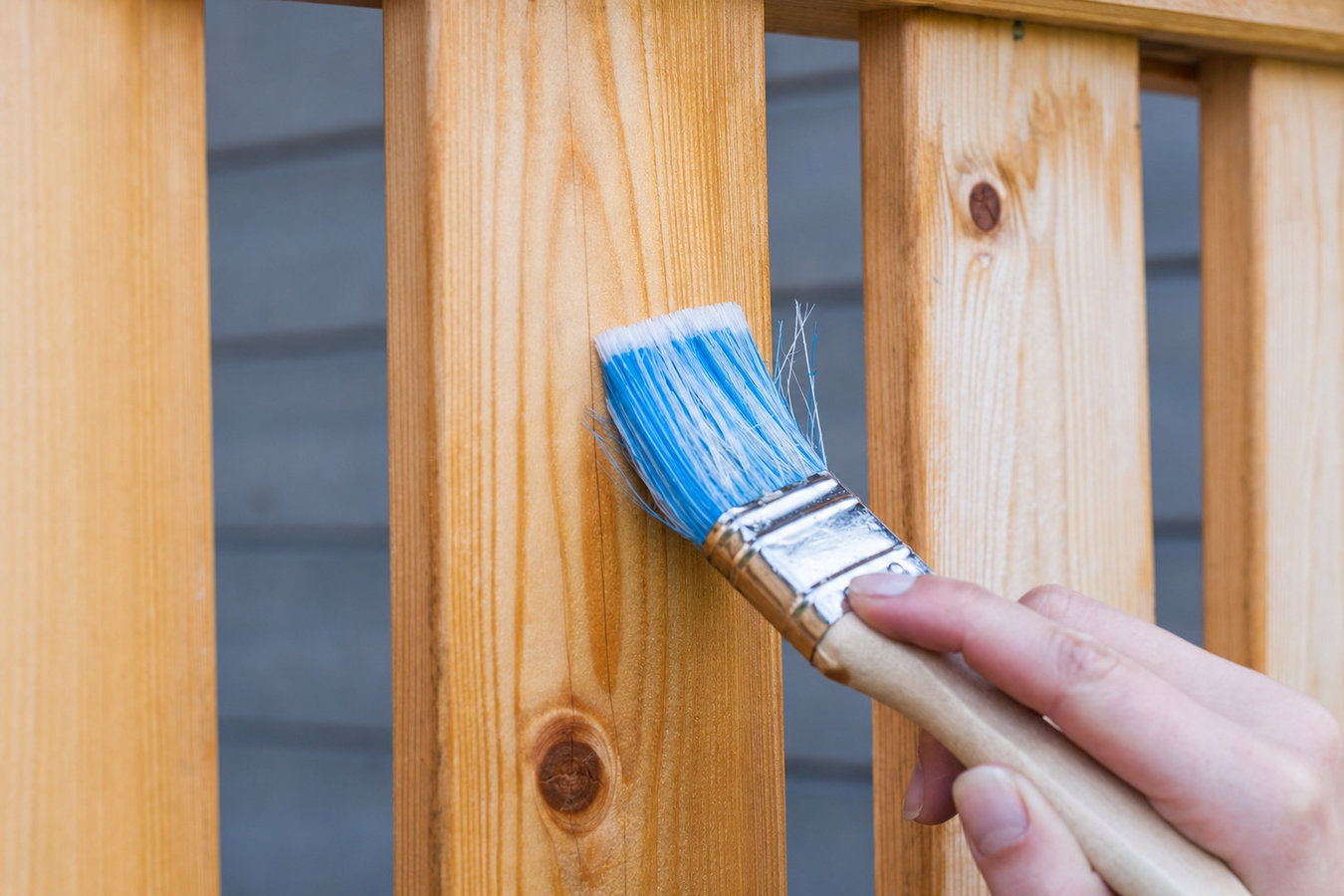
Del Rio's desert sun and summer heat destroy an unprotected wood fence fast. We clean, prep, and stain your fence using products chosen for this climate so the finish lasts years - not one season.
Fence staining and sealing in Del Rio means applying a penetrating stain that protects the wood from the inside out, followed by a sealer that locks in that protection against moisture - most residential jobs take one to two days, with one day for cleaning and drying and one day for the actual staining and sealing.
In a climate as hard on wood as Del Rio's, staining and sealing is not optional maintenance - it is the only thing standing between your fence and the constant cycle of intense UV, heat, and sudden rain that breaks down unprotected wood year after year. The surface-level signs come slowly: first the fence loses its color, then the wood goes gray and rough, then the cracks start. By the time the cracks are visible, you have already lost years off the fence's life. Catch it earlier and the work is straightforward - cleaning, drying, staining, sealing, done.
If your fence already has boards that are cracked, soft, or splitting, it may be worth pairing staining with a targeted fence replacement of those damaged sections first. Staining over compromised wood seals in the problem rather than solving it. Advanced Del Rio Fence has been serving Val Verde County since 2018 - we will tell you honestly what your fence needs before we start any work.
Splash a little water on your fence boards. If it beads up and rolls off, the sealer is still doing its job. If it soaks straight in and darkens the wood, the protective layer is gone. In Del Rio's climate, that means your fence is absorbing every rain event and humidity spike - and actively deteriorating between them.
When fence wood loses its color and turns that dry silver-gray, the UV protection has broken down. Del Rio's sun can take a fence from looking fresh to looking faded in a single season. Gray, rough-textured wood is not just a cosmetic issue - the surface is now open to moisture intrusion and splitting.
Dark patches after Del Rio's late-summer rain events are almost always mildew or algae. This is a sign that moisture is sitting on or in the wood long enough for organic growth to take hold. Left alone, mildew spreads, weakens the wood fibers, and will not go away on its own once it takes hold.
Small cracks form when wood repeatedly absorbs moisture and then dries out fast in the heat - a cycle Del Rio delivers all summer long. Cracks are a warning sign the wood is stressed. Get the fence cleaned and sealed now, and you can stop the damage from progressing. Wait longer and you are replacing boards, not just refinishing them.
Every staining job we do starts with a thorough assessment of your fence's current condition. We choose the stain and sealer based on your wood type, how long it has been since the last treatment, and the level of UV exposure your fence gets throughout the day - not just based on what we have on the truck. For most Del Rio fences, we recommend oil-based penetrating stains because they soak into the wood grain and resist breakdown from intense sun and heat longer than surface-applied water-based products. All stain and sealing work pairs naturally with our wood fence installation service - getting a new fence stained and sealed at installation gives you the best possible starting point for long-term durability in this climate.
If any boards need replacing before we start staining - a common finding on fences with years of Del Rio sun and wind damage - we will flag those during the assessment visit. We also check for mildew on every job and treat it with a wood-safe cleaner before applying any product. Staining over mildew is one of the most common reasons a finish fails within a season, and we do not cut that corner. For homeowners in subdivisions with HOA color requirements, we confirm acceptable finishes before we select a stain color. Our fence replacement team handles full board or panel swaps when the assessment turns up more damage than maintenance can fix.
Best for Del Rio's intense UV and heat - penetrates deep into the wood grain for durable protection that outlasts surface-applied products in this climate.
A faster-drying, lower-odor option for homeowners who want a quicker turnaround - works well on newer, smoother wood not yet weathered by full Del Rio sun exposure.
Applied over the stain as a final barrier coat - repels water, slows UV penetration, and is what makes the difference between a finish that lasts two years versus one.
Essential for any Del Rio fence that shows dark patches or gray staining after rain events - kills growth at the surface so it does not bleed through the new finish.
Cedar's open grain takes stain beautifully and is naturally rot-resistant - staining and sealing extends that advantage and keeps the wood looking rich rather than silver-gray.
The most common fence wood in Del Rio - requires full drying time after installation before accepting stain properly, and benefits most from regular re-treatment in this climate.
Del Rio sits in the Chihuahuan Desert borderlands with summer temperatures that regularly reach 100 degrees Fahrenheit or above. That level of UV exposure breaks down fence stain significantly faster than in Dallas or Austin - a product that might last four years in a cooler part of the state may only last two here. Combined with the persistent southwest winds that drive dust and debris across fence surfaces like fine sandpaper, and the late-summer rain events that bring sudden moisture after weeks of dry heat, Del Rio wood fences face a harder maintenance cycle than almost anywhere else in Texas. Homeowners we work with in Eagle Pass and across Uvalde face similar conditions, and the pattern is consistent: the fences that hold up are the ones on a regular two-to-three year treatment schedule, not the ones that get stained once and forgotten.
The caliche soil that underlies most Del Rio yards also plays a role homeowners do not always think about. Caliche is highly alkaline, and that chemistry can accelerate the breakdown of wood fence posts at ground level - a problem no amount of above-ground staining will fix. A good assessment before staining work begins should always include a check of the post bases, particularly on fences more than five years old. Newer subdivisions on the north and northwest sides of Del Rio may also have HOA covenants specifying acceptable fence colors or finishes, and we verify those requirements before selecting any product. The Texas A&M AgriLife Extension publishes research on wood preservation in Texas climates that informed how we approach product selection for local conditions.
When you reach out, we ask a few quick questions - fence length, wood type, and whether it has been stained before. Most jobs get a written estimate after a brief site visit, because the fence's current condition affects the scope of prep work. No obligation, no pressure.
We walk the fence and look for mildew, cracking, loose boards, and existing finish condition. This is also when we discuss product options and confirm whether any HOA color requirements apply. You get a written quote that separates prep, materials, and labor.
Before any stain goes on, we clean the fence - removing dirt, mildew, and any flaking old finish using a wood-safe cleaner. In Del Rio's heat, drying typically takes 24 to 48 hours. Do not be surprised if the staining happens the day after the cleaning - that wait is what makes the finish last.
We apply the stain - usually by sprayer followed by back-brushing to work the product into the grain - then the sealer coat once the stain has dried. We clean up any overspray and walk you through the finished fence. You get a timeline for drying and care, plus a recommended schedule for the next treatment.
No commitment - just a written estimate, a clear product recommendation for your fence and climate, and an honest answer about what your fence needs.
(830) 488-9050Most staining failures in Del Rio trace back to one thing: stain applied over dirty, damp, or mildew-covered wood. We clean every fence before any product goes on, treat mildew at the surface, and wait the full drying time before staining. That step costs more time upfront and is what separates a finish that holds from one that peels within a season.
We select stains and sealers based on Del Rio's specific combination of UV intensity, heat, and late-summer moisture cycles - not just whatever is in stock. The American Fence Association, of which our work aligns with industry standards, confirms that product selection for local climate is one of the most important factors in finish longevity. We use oil-based penetrating stains as our default for this climate because they outperform surface-applied products here.
You see the cost of prep, materials, and labor separately before we start. If a board swap is needed before staining, we tell you that during the estimate visit - not after we have already started cleaning. No surprises in the final invoice.
We have been working in Del Rio and surrounding communities since 2018. That means we know the HOA requirements in newer north-side subdivisions, the caliche post conditions in older neighborhoods, and which products hold up after a full Val Verde County summer. Out-of-town crews do not have that local context.
The prep work and product selection are what determine whether a staining job lasts two years or five in Del Rio's climate. We do both correctly, and we give you a plain-language maintenance timeline at the end of every job so you know exactly when to call us back.
When boards or entire sections are past the point of maintenance, full replacement gives your property a clean start with properly set posts and new materials.
Learn MoreNew wood fence installation in Del Rio designed for caliche soil post-setting and local UV conditions - stained and sealed at installation for lasting protection.
Learn MoreSummer sun does not wait - book your estimate now before the next heat wave takes another season off your fence's life.